The way people search for information online is changing. Traditionally, users entered a keyword or question into Google, explored a list of search results and visited different websites to find the information they needed.
Today, Google is introducing more AI-powered search experiences that help users understand complex topics, explore different perspectives and ask follow-up questions without starting a completely new search.
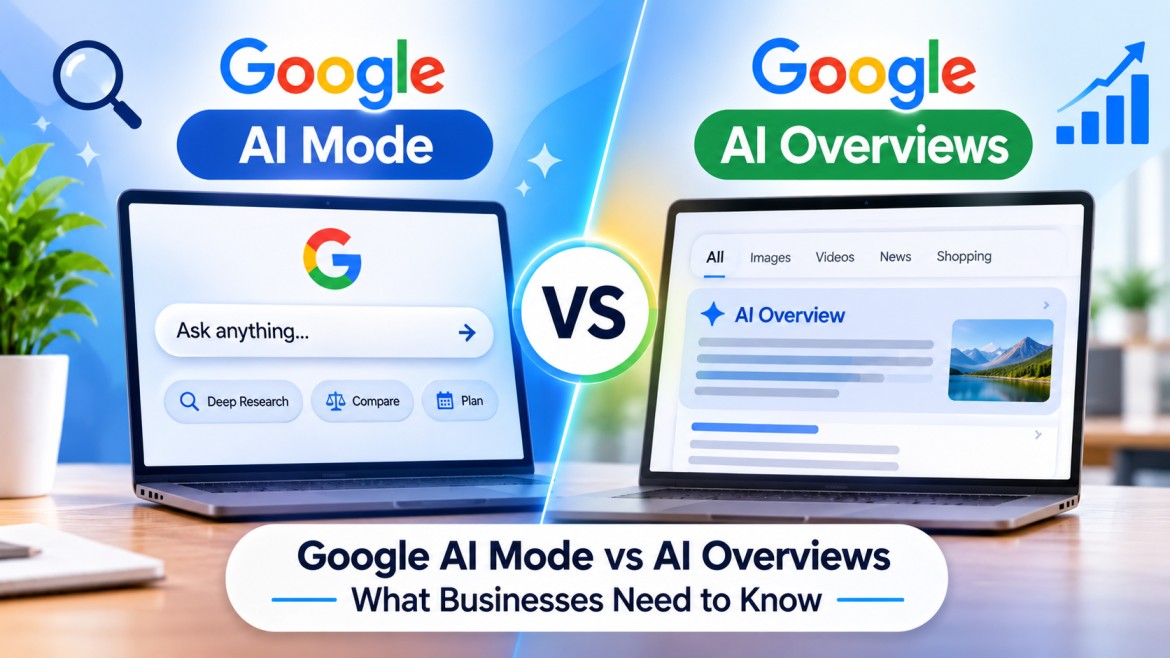
Two important features in this changing search environment are Google AI Mode and Google AI Overviews.
Although both use artificial intelligence to generate responses, they serve different purposes and provide different search experiences. These developments also create new considerations for businesses, website owners, SEO professionals and digital marketers.
For businesses, the key question is no longer only how to rank on Google. It is also how to build a website and brand that can be discovered, understood and referenced across evolving AI-powered search experiences.
In this guide, Digital Rank Media explains the difference between Google AI Mode and AI Overviews, their impact on traditional SEO, and how businesses can use SEO and Generative Engine Optimization (GEO) practices to strengthen their search visibility.
1. What Is Google AI Mode?
Google AI Mode is an AI-powered search experience that allows users to ask detailed questions, explore topics and receive comprehensive responses with links to supporting websites.
Unlike a traditional search query that generally returns a list of webpages, AI Mode is designed to handle more complex questions and conversational searches.
For example, a user might ask:
"Which digital marketing strategy is suitable for a small eCommerce business that wants to increase organic traffic and generate more qualified leads?"
Instead of searching for each part separately, users can explore a more detailed response and ask additional questions to understand different options.
Key Features of Google AI Mode
1. Conversational Search
Users can ask questions in natural language rather than relying only on short keyword phrases.
2. Follow-Up Questions
Users can continue exploring a topic by asking additional questions within the same search experience.
3. Complex Query Understanding
AI Mode is designed to handle detailed questions involving research, comparisons and multiple related topics.
4. Query Fan-Out
Google may break a user's question into multiple related searches across different subtopics and sources. This helps gather information from different relevant webpages.
5. Links to Supporting Sources
AI Mode can provide links to webpages that support its generated responses, giving users opportunities to explore the original information.
For businesses, this means that creating useful, relevant and accessible website content remains important when users explore complex topics through AI search.
2. What Are Google AI Overviews?
Google AI Overviews are AI-generated summaries that may appear within Google Search results for queries where an AI-generated response is considered useful.
They help users understand the main points of a topic more quickly while providing links to supporting websites for further information.
For example, when someone searches:
"What are the benefits of technical SEO for an eCommerce website?"
Google may display an AI-generated overview summarising important points and showing links to relevant sources.
Key Features of Google AI Overviews
1. Quick Information Summaries
AI Overviews provide a summary of relevant information directly within the search experience.
2. Supporting Website Links
Users can explore the websites referenced in the overview to learn more about the topic.
3. Contextual Search Experience
The feature is designed to provide useful context for searches where a generated summary can add value.
4. Multiple Information Sources
Google may use information from multiple relevant sources to generate a response.
5. Additional Website Discovery
Supporting links can give users opportunities to discover websites beyond the traditional list of search results.
For businesses, appearing as a relevant supporting source may create another opportunity for brand discovery and qualified website visits. However, inclusion is not guaranteed.
3. Google AI Mode vs AI Overviews: What Is the Difference?
Although both features are powered by Google's AI search capabilities, their purposes and user experiences are different.
|
Comparison |
Google AI Mode |
Google AI Overviews |
|
Main purpose |
Detailed exploration and conversational search |
Quick AI-generated summaries |
|
Search experience |
Interactive and conversational |
Summary integrated into Google Search |
|
User behaviour |
Users can explore topics and ask follow-up questions |
Users can understand key information and visit supporting links |
|
Query type |
Complex questions, research and comparisons |
Queries where a summary adds value |
|
Follow-up searches |
Supports continued conversations |
Primarily provides a summary within the search results |
|
Information sources |
Can retrieve information across related searches and sources |
Can use relevant search results and related information sources |
|
Website discovery |
Links to supporting webpages |
Links to websites supporting the overview |
|
SEO consideration |
Content relevance, accessibility and usefulness |
Content relevance, accessibility and usefulness |
Which Is More Important for Businesses?
Both are important because they represent different ways users can discover information.
For example:
-
A user researching SEO services may use an AI Overview to understand the basics of SEO.
-
The same user may use AI Mode to compare SEO agencies, understand pricing factors and explore different marketing strategies.
Businesses should therefore develop useful content that addresses both straightforward questions and more detailed customer research needs.
4. How Does Google AI Search Work?
Google's AI search experiences combine generative AI capabilities with information from Google's search systems.
The exact systems can vary between features, but the general process can be understood through the following steps.
Step 1: Understanding the User's Query
Google analyses the user's question to understand its topic, intent and information requirements.
For example:
"How can a local business improve its Google rankings and generate more enquiries?"
This query may involve local SEO, website optimisation, Google Business Profile and lead generation.
Step 2: Finding Relevant Information
Google's systems can retrieve relevant information from its Search index and other available sources.
Step 3: Query Fan-Out
For more complex questions, Google may generate multiple related searches to explore different aspects of the original query.
For example, the original question may lead to related searches about:
-
Local SEO optimisation
-
Google Business Profile
-
Local keyword research
-
Website content improvements
-
Local business reviews
Step 4: Generating an AI Response
The AI system combines relevant information to create a response that addresses the user's question.
Step 5: Showing Supporting Links
Google may display links to websites that support the information presented in the AI-generated response.
This creates an opportunity for relevant websites to be discovered through AI-powered search experiences.
5. How Is Google AI Search Changing Traditional SEO?
The introduction of Google AI Mode and Google AI Overviews is changing how users interact with search results.
However, it does not mean traditional SEO is becoming irrelevant.
Google's guidance states that the same foundational SEO practices remain important for its AI search features. Websites still need to meet technical requirements, provide helpful content and follow Search policies.
Here are some important considerations for businesses.
A. Search Behaviour Is Becoming More Conversational
Users increasingly ask detailed questions rather than searching only with short keywords.
Traditional keyword example:
"SEO agency in Delhi"
Conversational search example:
"Which SEO agency can help a small business improve organic leads in Delhi?"
Businesses should understand the questions their target audiences ask and create useful content that addresses their needs.
B. Content Quality and Relevance Matter
Publishing large numbers of generic articles is not a reliable way to build AI search visibility.
Businesses should focus on:
-
Detailed service explanations
-
Original insights
-
Accurate information
-
Practical examples
-
Relevant industry knowledge
-
Clear answers to customer questions
C. Brand Visibility Goes Beyond Traditional Rankings
Businesses should consider how their brand is represented across their website and relevant online sources.
This includes accurate company information, clear service descriptions, useful resources and trustworthy business profiles.
D. Search Traffic and Click Behaviour May Change
AI-generated summaries can change how users interact with traditional search results.
Some users may find enough information in an overview, while others may click through to explore supporting websites in greater detail.
Businesses should monitor organic traffic, search impressions, clicks, enquiries and conversion quality rather than assuming that every AI feature will have the same effect on traffic.
6. How Can Businesses Optimise for Google AI Mode and AI Overviews?
Businesses do not need an entirely separate technical SEO system to become eligible for Google's AI search features.
However, they should strengthen their existing SEO foundations and create content that answers real user needs.
Here are practical recommendations.
1. Create Helpful and People-First Content
Content should provide accurate, useful and relevant information rather than simply repeating keywords.
For example, a digital marketing agency can create detailed resources about:
-
What is technical SEO?
-
How does eCommerce SEO work?
-
What is the difference between SEO and PPC?
-
How can businesses improve organic traffic?
-
What is Generative Engine Optimization?
-
How does Google AI search affect SEO?
Each article should have a clear purpose and provide useful information beyond what is already widely available.
2. Optimise Content for Conversational Search
Include natural questions and detailed answers where they genuinely help readers.
For example, instead of targeting only:
Create supporting content around questions such as:
-
How does eCommerce SEO improve product visibility?
-
How can online stores optimise product category pages?
-
What technical SEO issues affect large eCommerce websites?
-
How can businesses improve organic product discovery?
Use these questions to guide useful content, not to create unnecessary pages for every keyword variation.
3. Build Topical Authority
A website should demonstrate relevant knowledge across the subjects it covers.
For a digital marketing company, a topical structure may include:
SEO Cluster
-
SEO fundamentals
-
Technical SEO
-
On-page SEO
-
Local SEO
-
eCommerce SEO
-
Keyword research
AI Search Cluster
-
Google AI Mode
-
Google AI Overviews
-
Generative Engine Optimization
-
Answer Engine Optimization
-
AI search visibility
-
AI content optimisation
Digital Marketing Cluster
-
PPC advertising
-
Social media marketing
-
Lead generation
-
Marketing automation
-
Conversion optimisation
Connect related blogs with relevant service pages through natural internal links.
4. Improve Technical SEO and Crawlability
Search engines need to access and understand important website content.
Review these technical SEO elements:
-
XML sitemap
-
Robots.txt
-
Canonical tags
-
Indexability
-
Crawlability
-
JavaScript rendering
-
Internal linking
-
Page loading performance
-
Mobile usability
-
Broken links
-
Redirects
-
Duplicate content
Important information should be available in accessible text, and critical content should not be unnecessarily hidden behind technical barriers.
5. Use Structured Data Correctly
Structured data helps search engines understand specific information about webpages.
Depending on the content, businesses can consider relevant schema types such as:
-
Organization
-
Article
-
BlogPosting
-
BreadcrumbList
-
Service
-
LocalBusiness, where applicable
-
Person
Ensure that schema accurately represents the visible content of the page.
Important: There is no special Google AI Overview schema or AI Mode schema that guarantees inclusion in AI-generated responses.
6. Strengthen Your Brand and Business Information
Maintain consistent and accurate information across your website and relevant business profiles.
Review:
-
Business name
-
Website URL
-
Contact details
-
Services
-
Business description
-
Location information, where relevant
-
Author information
-
About Us page
Businesses should also publish genuine information about their expertise and services rather than creating artificial brand mentions or irrelevant directory listings.
7. Add Original Insights and Practical Examples
Generic content is easy to reproduce and often offers little additional value.
Try to include useful information based on genuine experience, such as:
-
Original research
-
Practical SEO observations
-
Real implementation examples
-
Industry-specific challenges
-
Detailed comparisons
-
Expert explanations
-
Relevant screenshots or visual demonstrations
This helps differentiate your content from articles that simply summarise information available elsewhere.
8. Optimise Images and Videos
AI-powered search is not limited to text.
Use relevant images and videos to support important information.
Recommended practices include:
-
Descriptive image filenames
-
Relevant alt text
-
Compressed images
-
High-quality visuals
-
Clear video titles
-
Useful video descriptions
-
Video transcripts where appropriate
Visual content should support the subject of the webpage rather than act as decoration alone.
9. Improve Internal Linking
Connect relevant articles, service pages and supporting resources.
For example, this article can link to:
-
SEO Services
-
Technical SEO
-
eCommerce SEO
-
Website Development
-
Contact Us
Use descriptive anchor text so readers understand the destination.
10. Monitor Google Search and AI Search Performance
Use Google Search Console and Google Analytics 4 to understand how your website performs.
Monitor:
-
Organic clicks
-
Search impressions
-
Search queries
-
Landing-page performance
-
Organic conversions
-
Engagement and referral activity
-
Changes in search traffic
Google currently includes traffic from AI Overviews and AI Mode within the overall Web search reporting in Search Console, rather than providing a separate universal AI ranking report for every site.
7. What Is GEO and How Does It Relate to Google AI Search?
Generative Engine Optimization (GEO) is a term used for practices intended to improve a brand's visibility, discoverability and representation in generative AI-powered search experiences.
While traditional SEO focuses on organic search visibility, GEO considers how information may be retrieved, interpreted, referenced and presented in AI-generated responses.
For example, a user may ask an AI search platform:
"Which digital marketing company can help an eCommerce business improve SEO and paid advertising performance?"
The AI system may provide a response using relevant information from different sources.
A business with clear service descriptions, useful content and accurate information may have a better foundation for being understood and discovered.
SEO vs GEO: What Is the Difference?
|
Area |
Traditional SEO |
GEO |
|
Primary focus |
Organic search visibility |
Discoverability in generative AI experiences |
|
Content approach |
Search intent and relevant content |
Useful, clear and well-supported information |
|
Technical foundation |
Crawlability and indexability |
Accessible and understandable content |
|
Brand signals |
Relevant website and external presence |
Consistent and trustworthy brand information |
|
Measurement |
Rankings, clicks, impressions and conversions |
Mentions, citations, linked sources and referral activity where measurable |
GEO should complement traditional SEO rather than replace it.
Google's own documentation explains that its generative search features use existing Search ranking, retrieval and quality systems. It also describes GEO and AEO as terms used for work focused on visibility in AI search experiences, while emphasising that foundational SEO remains relevant.
GEO Strategies for Google AI Mode and AI Overviews
Businesses can strengthen their GEO approach through the following activities:
1. Develop Clear Brand Information
Explain who you are, what services you offer, whom you help and how your business works.
2. Publish Useful Question-Based Content
Answer relevant questions in a clear and structured format.
3. Build Relevant Topic Coverage
Create connected resources that demonstrate genuine subject knowledge.
4. Maintain Technical Accessibility
Make sure important pages can be crawled, indexed and accessed.
5. Add Relevant Sources and Supporting Information
Use credible references for factual claims and provide original explanations wherever possible.
6. Keep Information Accurate and Updated
Review important service pages, articles, contact details and business information regularly.
7. Monitor Brand Mentions and Citations
Test relevant questions across selected AI platforms and record whether your brand or website is referenced. Treat these observations as directional because AI responses can vary.
8. How Can Businesses Track Google AI Search Visibility?
Tracking AI search performance requires a combination of traditional SEO reporting and structured manual observation.
A. Google Search Console
Use Search Console to monitor:
-
Organic clicks
-
Impressions
-
Search queries
-
Landing pages
-
Search performance trends
Google currently reports AI Overview and AI Mode traffic within the overall Web search type.
B. Google Analytics 4
Review website traffic and conversions from identifiable referral sources.
You can monitor:
-
Referral sessions
-
Landing pages
-
Engaged sessions
-
Enquiry form submissions
-
Phone and email clicks, where tracked
-
Lead quality, where CRM data is available
C. AI Search Visibility Testing
Create a consistent set of relevant questions and test them across selected AI platforms.
For example:
-
Which SEO agency can help an eCommerce business?
-
How can a small business improve Google search visibility?
-
What is the difference between SEO and GEO?
-
Which technical SEO services does a growing business need?
Record:
-
Whether the brand is mentioned
-
Whether the website is cited or linked
-
Which pages are referenced
-
Whether the information is accurate
-
How results change over time
Avoid treating a single AI response as proof of a ranking position.
9. What Should Businesses Do Next? A Practical AI Search SEO Checklist
Businesses can use this checklist to prepare their websites for evolving AI-powered search experiences.
Technical SEO
-
Review website crawlability and indexability.
-
Check robots.txt and XML sitemap.
-
Resolve important rendering and canonical issues.
-
Ensure important content is available in text.
-
Improve mobile usability and page experience.
Content and GEO
-
Update important service pages.
-
Publish detailed, helpful articles.
-
Add relevant questions and answers.
-
Include genuine experience and original insights.
-
Connect related content through internal links.
-
Keep factual information current.
Brand and Authority
-
Maintain accurate business information.
-
Strengthen About Us and author information.
-
Publish useful resources in your area of expertise.
-
Build legitimate industry relationships and relevant references.
Measurement
-
Monitor Google Search Console.
-
Track organic conversions in GA4.
-
Test a consistent set of AI search prompts.
-
Record brand mentions and website citations.
-
Review performance and improve content regularly.
10. How Digital Rank Media Can Help Businesses with SEO and GEO
At Digital Rank Media, we understand that businesses need a strong online presence across traditional search engines and emerging AI-powered discovery experiences.
Our approach combines foundational SEO practices with practical Generative Engine Optimization (GEO) considerations to help businesses improve their website structure, content quality and search visibility.
Our services include:
SEO Services
-
Technical SEO audits
-
Keyword research and search intent analysis
-
On-page SEO
-
Content optimisation
-
Internal linking
-
Organic growth strategy
GEO and AI Search Optimisation
-
AI search visibility analysis
-
GEO content strategy
-
Question-based content planning
-
Brand information consistency
-
Topical authority development
-
AI search mention and citation monitoring
Website Development
-
WordPress website development
-
Shopify website development
-
eCommerce website development
-
SEO-friendly website structure
-
Website performance improvements
Other Digital Marketing Services
-
PPC advertising
-
Social media marketing
-
Graphic design
-
Digital marketing strategy
Whether you want to improve organic search performance, strengthen your website's AI search readiness or build a broader digital marketing strategy, Digital Rank Media can help you identify relevant opportunities.
Conclusion: Prepare Your Business for the Future of Google AI Search
The introduction of Google AI Mode and Google AI Overviews represents an important change in how users discover and explore information online.
Businesses should not abandon traditional SEO or chase shortcuts to appear in AI-generated answers. Instead, they should build a strong digital foundation through useful content, technical accessibility, accurate brand information and a well-organised website.
By combining SEO, GEO and a people-first content strategy, businesses can prepare for changing search experiences while continuing to focus on relevant traffic, brand discovery and meaningful conversions.
At Digital Rank Media, our focus is on helping businesses build stronger online visibility through practical SEO, GEO, website development and digital marketing strategies.
Ready to improve your website's search visibility? Contact Digital Rank Media to discuss your SEO and AI search optimisation requirements.